
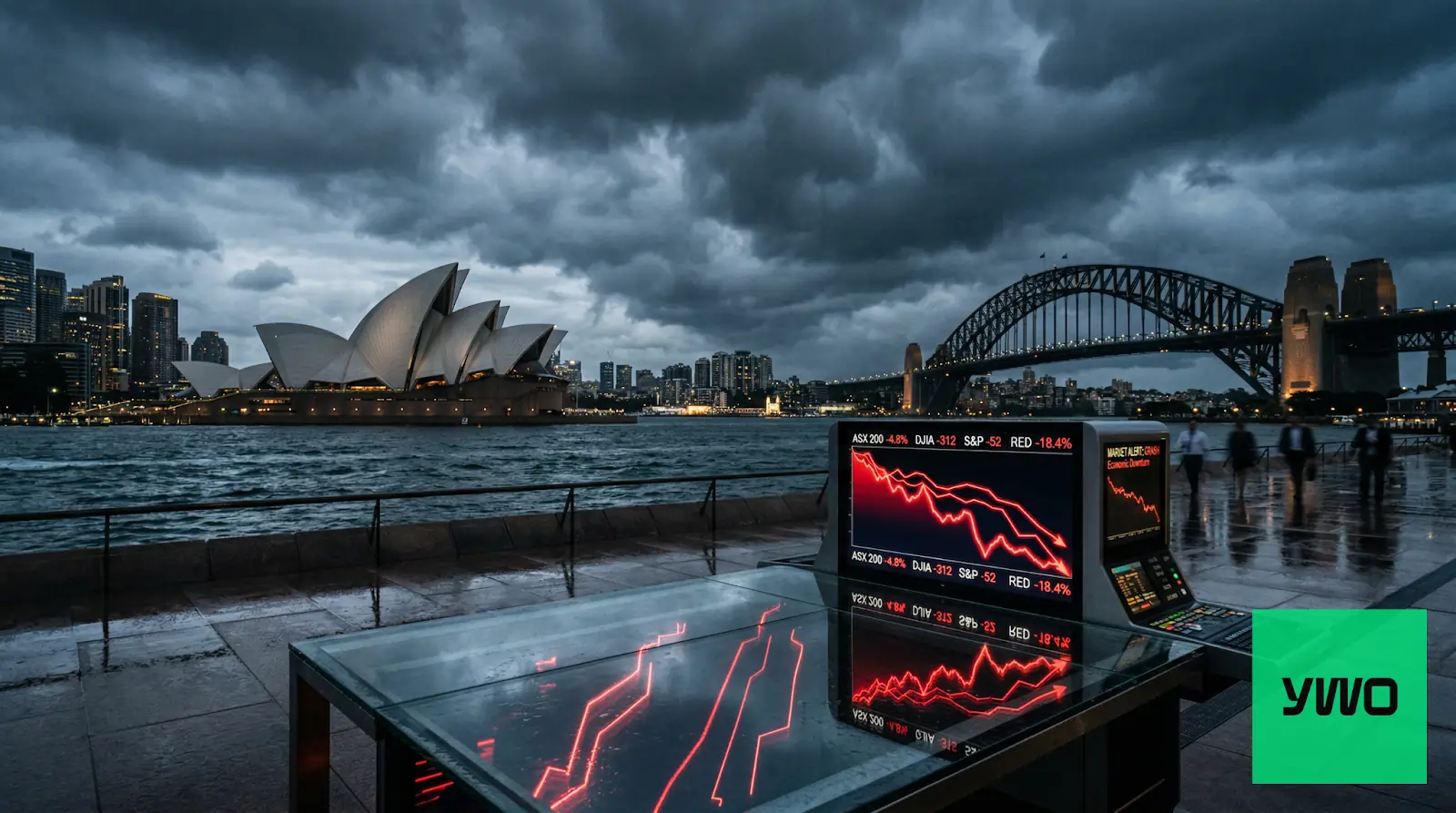
Australian equities declined on Tuesday, with the S&P/ASX 200 (XJO) closing 1.06% lower as escalating geopolitical tensions centred on Iran weighed on risk appetite across Asia-Pacific markets, according to Investing.com.
Context
The session’s decline reflects the broader sensitivity of Asia-Pacific equity markets to Middle East geopolitical developments. Risk-off sentiment intensified following remarks by former U.S. President Donald Trump regarding the ongoing Iran conflict, which contributed to a regional sell-off, according to Investing.com.
Analysts note that geopolitical escalation in the Middle East has historically weighed on equity markets through multiple channels, including energy price volatility, safe-haven capital rotation, and broader uncertainty around global trade flows. Market relationships are dynamic and may change over time, and past correlations do not guarantee future performance.
Market participants appear to be reassessing regional risk exposure, with the Australian benchmark tracking broader Asian losses. Energy and materials sectors — which carry significant weight in the ASX 200 — may face particular scrutiny as oil price dynamics shift in response to Middle East developments, according to Reuters.
Bullish observers may argue that any geopolitical-driven sell-off could represent a mean-reversion opportunity if tensions de-escalate. Bears, however, may point to the risk of prolonged conflict and its potential to sustain elevated commodity price volatility and dampen business confidence across the region.
Key Data
- S&P/ASX 200 (XJO): Closed down 1.06% on the session, per Investing.com
- The index’s decline was broad-based, consistent with risk-off positioning observed across Asian equity markets
- The 1.06% move places the session among the more notable single-day declines in recent weeks for Australian equities
- Key technical levels on the XJO are being monitored by traders as observational reference points; the index has historically encountered support and resistance at prior consolidation zones
Market Snapshot
| Asset | Change | Notes | Source |
|---|---|---|---|
| S&P/ASX 200 (XJO) | -1.06% | Risk-off close; geopolitical pressure | Investing.com |
| Asia-Pacific Equities (Broad) | Lower | Regional sell-off noted | Reuters |
| Oil (Crude) | Volatile | Middle East tensions may influence crude pricing | Reuters |
| Gold (XAU/USD) | Potentially supported | Safe-haven demand tends to rise during geopolitical stress | Reuters |
| AUD/USD | Under pressure | Risk-off environments have historically weighed on the Australian dollar | Reuters |
| U.S. Equity Futures | Mixed | Monitoring Iran developments and diplomatic signals | CNBC |
Note: Market relationships are dynamic and may change over time. The above observations reflect general historical tendencies and do not constitute predictive analysis.
Events Ahead
Traders and analysts may be watching the following upcoming catalysts for potential market impact:
- Middle East diplomatic developments — Any shift in the Iran conflict trajectory, including ceasefire signals or escalation, may influence risk sentiment across Asia-Pacific markets; monitor Reuters for updates
- U.S. political commentary — Further statements from U.S. political figures regarding Iran policy could affect risk appetite; CNBC and Bloomberg are tracking developments
- Australian economic data releases — Domestic macro data may provide additional context for RBA policy expectations; upcoming releases are listed on the Investing.com Economic Calendar
- RBA communications — Any guidance from the Reserve Bank of Australia regarding monetary policy could influence the direction of the AUD and domestic equities; monitor the RBA for official releases
- Global oil inventory data — Energy sector pricing, which may affect ASX-listed resources stocks, can be tracked via the EIA
Risk Disclaimer: Trading CFDs involves substantial risk and may result in the loss of your invested capital. CFDs are complex instruments and come with a high risk of losing money rapidly due to leverage. You should consider whether you understand how CFDs work and whether you can afford to take the high risk of losing your money. Past performance is not indicative of future results. This content is for informational and educational purposes only and does not constitute investment advice.